Europeans agains fake news
About the project

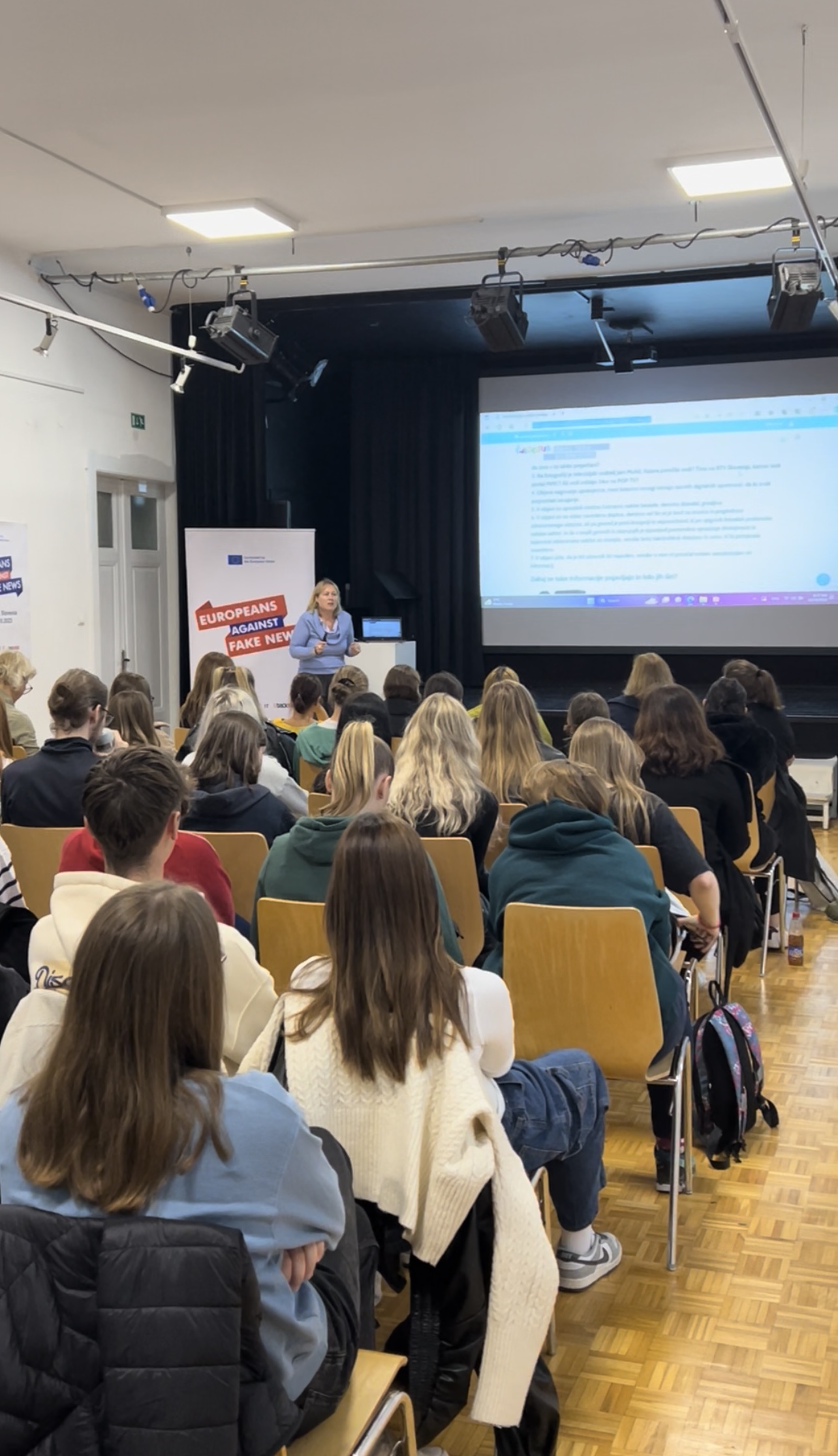
The “Europeans Against Fake News” is an international project co-funded by the European Union and implemented by youth organizations from Belgium, Slovenia, Spain and Greece with an aim to build the critical thinking and digital literacy skills of young people in order to enable them to detect, deconstruct and stop the spread of disinformation in the online space. In order to achieve this we organized a series of EAF events involving thousands of people around Europe within which various innovative EAF outputs for promoting critical thinking were made.
The project also has a goal to stimulate local authorities and other relevant stakeholders to take an active role in preventing the creation and dissemination of fake news in their communities. This is done through EAF Guidelines and Policy recommendations that are available to all organizations, institutions or individuals willing to join our struggle.


Some interesting statistics
%
Percentage of people exposed to fake news
%
Percentage of young people using Internet
%
Percentage of people using social media
%
Percentage of people thinking that fake news are a big problem
%
Percentage of people who think schools are not sufficient in teaching youth critical thinking skills
Testimonials
Take a look at experiences of people who took part in EAF events.
“To me it was very interesting to learn about the critical thinking. We had some classes in school about it, but this was a much more fun way of learning about it. I also appreciate the way the facilitator was leading us through debunking of fake news and when we prepared our ideas for the graffiti. We were very creative and had lots of fun.”
“I was fascinated with the fact that we can easily be fueled with just a single detail added to some news. When we read the example of fake news, I believed it since it sounds so authentic. I will now pay more attention to what I read and adopt as a truth online.”
“For sure, I’m more aware about the threats on social media, especially since most of those that we talked about sounded true to me. Some of people who were presenting fake news teach us what to do when we see fake news. I think we need to share this online and with our friends and families.”

The projet “Europeans Against Fake News” is co-funded by the European Union.
